A River Survival Game Rooted in the Klamath
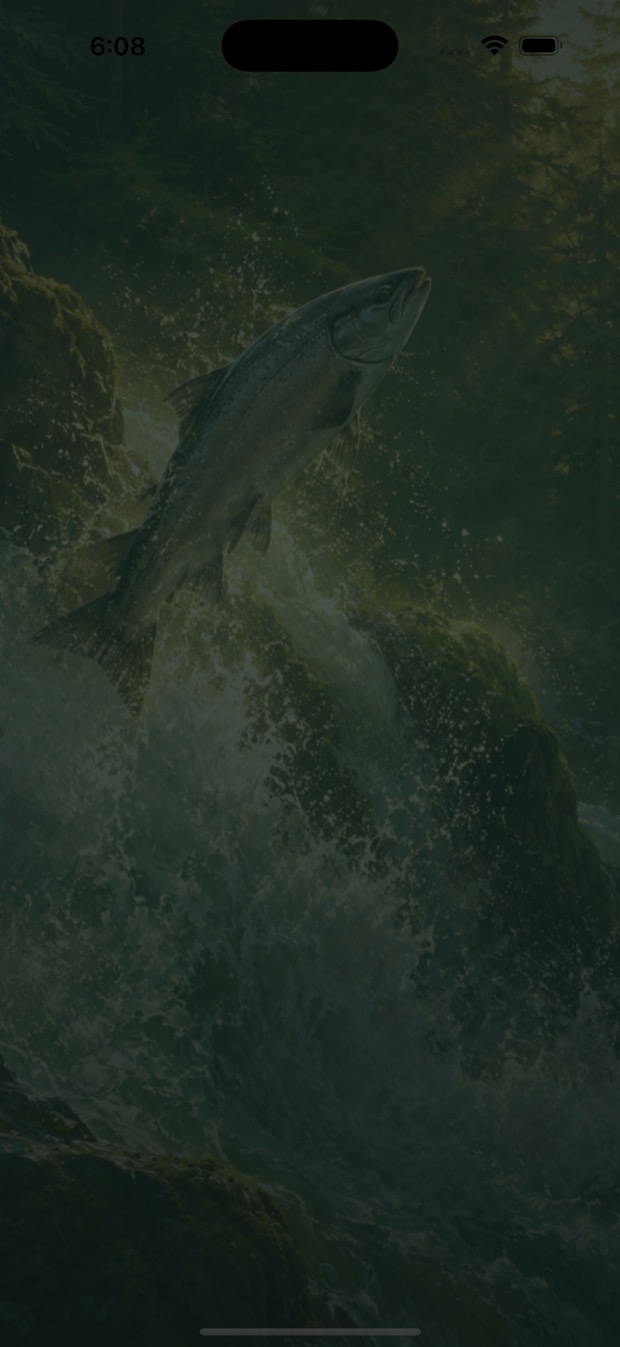
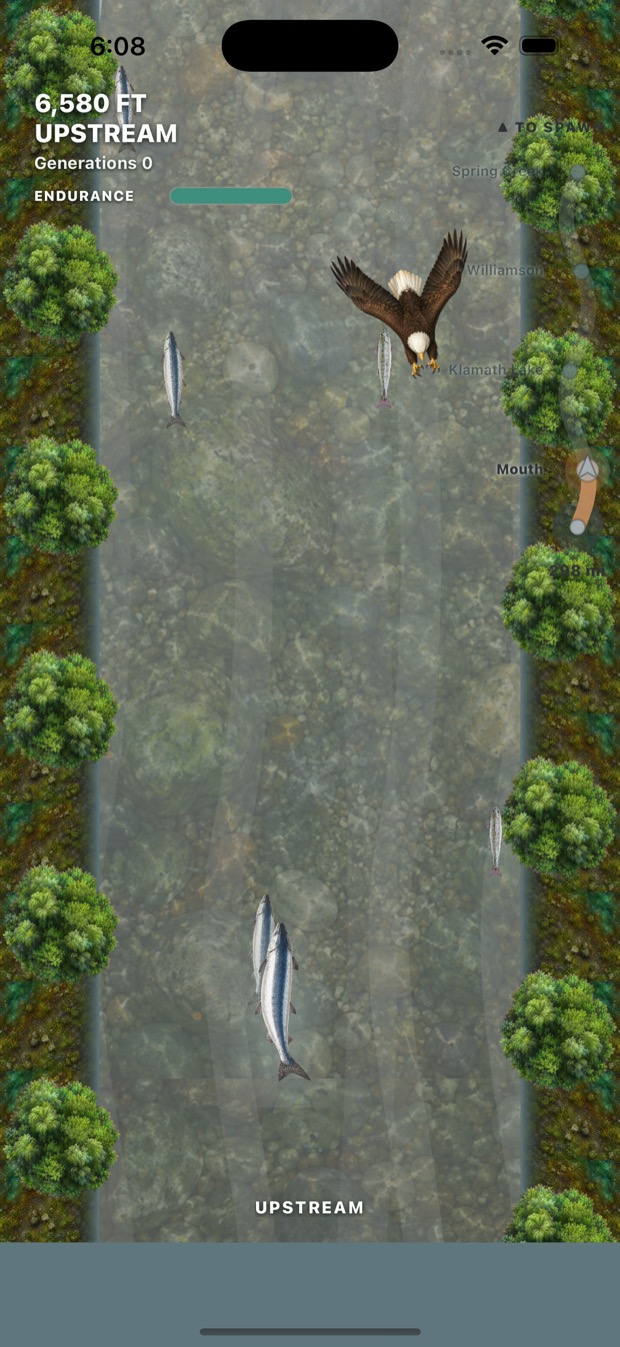
Salmon Run is a live arcade game for iOS. You play a salmon making the journey home up a Klamath river, working past a run of real hazards to reach the spawning grounds. When you get there, you spawn, and the run starts over.
There are no ads in Salmon Run and no in-app purchases. You pay once and the game is yours. That decision shapes what the game is. The whole of it is the salmon's journey, with nothing layered on top to sell you while you play.
How Salmon Run Plays
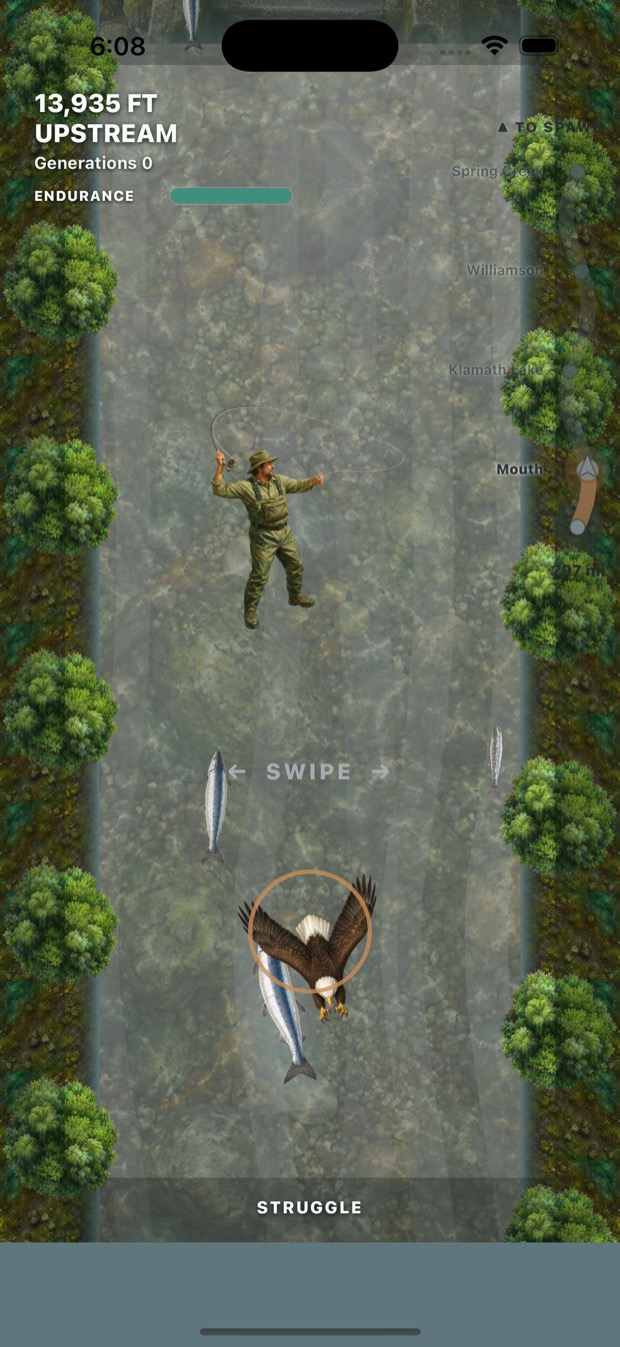
The hazards in the game are the ones that actually face a salmon on the Klamath. Bears wait at the falls. Eagles drop from above. Nets and fishers line the banks. Dams sit across the water. Each hazard asks something different of the player. Bears are a matter of timing. Eagles are a matter of watching the sky and moving fast. A dam is its own kind of obstacle. You cannot outswim it. You find the way around it, or through a fish ladder if the river has one.
The game is built as a loop. Reaching the spawning ground opens back onto the start of the run. There is no win screen at the end of it. Survival keeps going, the way it does in the river. A salmon does not finish the journey once and rest. The species holds on by running the cycle again in the next generation, and the game keeps that shape.
The Klamath Salmon and a Live Ecological Story
The Klamath River runs from south-central Oregon through the Cascade and Siskiyou ranges into Northern California and out to the Pacific. The Klamath Tribes, the Klamath, Modoc, and Yahooskin peoples, have lived in this basin since time immemorial. The salmon of the river have been central to that life, as a food source, as an anchor for the whole watershed, and as part of the long relationship between the people and the land.
The dam story on the Klamath is recent. The removal of four Klamath River dams finished in 2024, the largest dam removal project in United States history. Chinook salmon have been documented in stretches of the river above the old dam sites, water that was closed to them for more than a century. Salmon Run was made inside that story. The dam in the game is the specific thing that has stopped the run on the real river, and the work to take those dams down is a large part of why the Klamath is a living subject right now. The game carries that weight and lets the player feel it in play.
Learning the Salmon Life Cycle Through Play
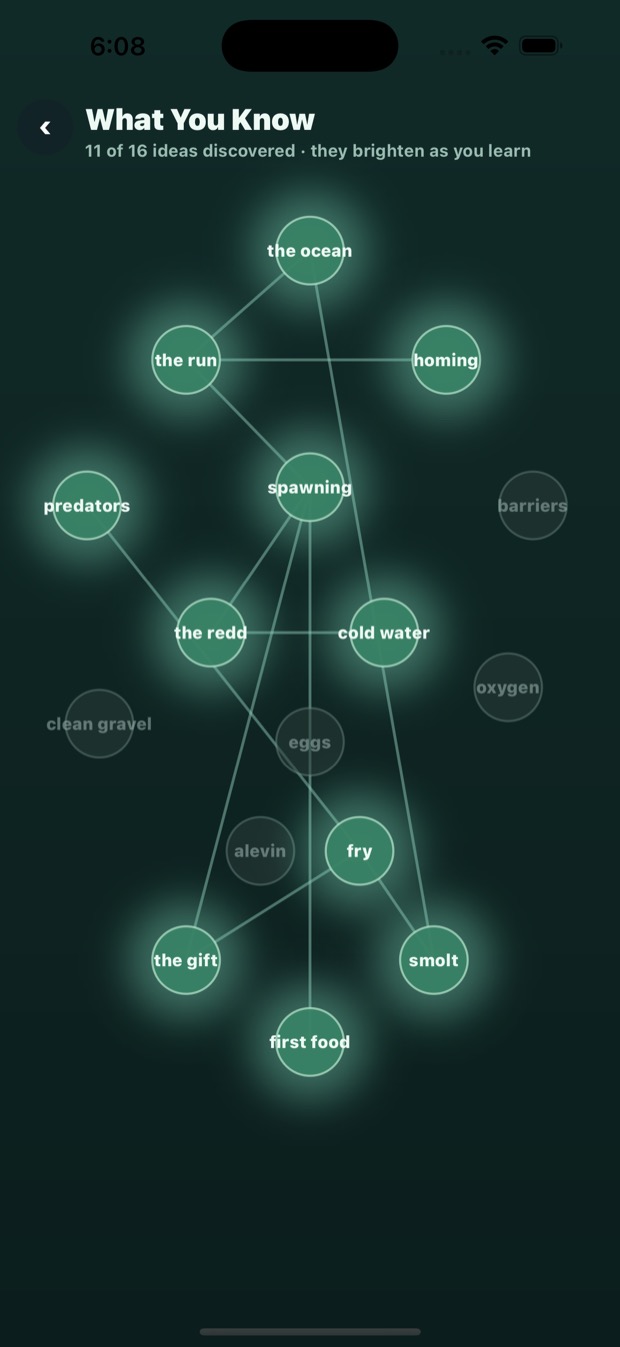
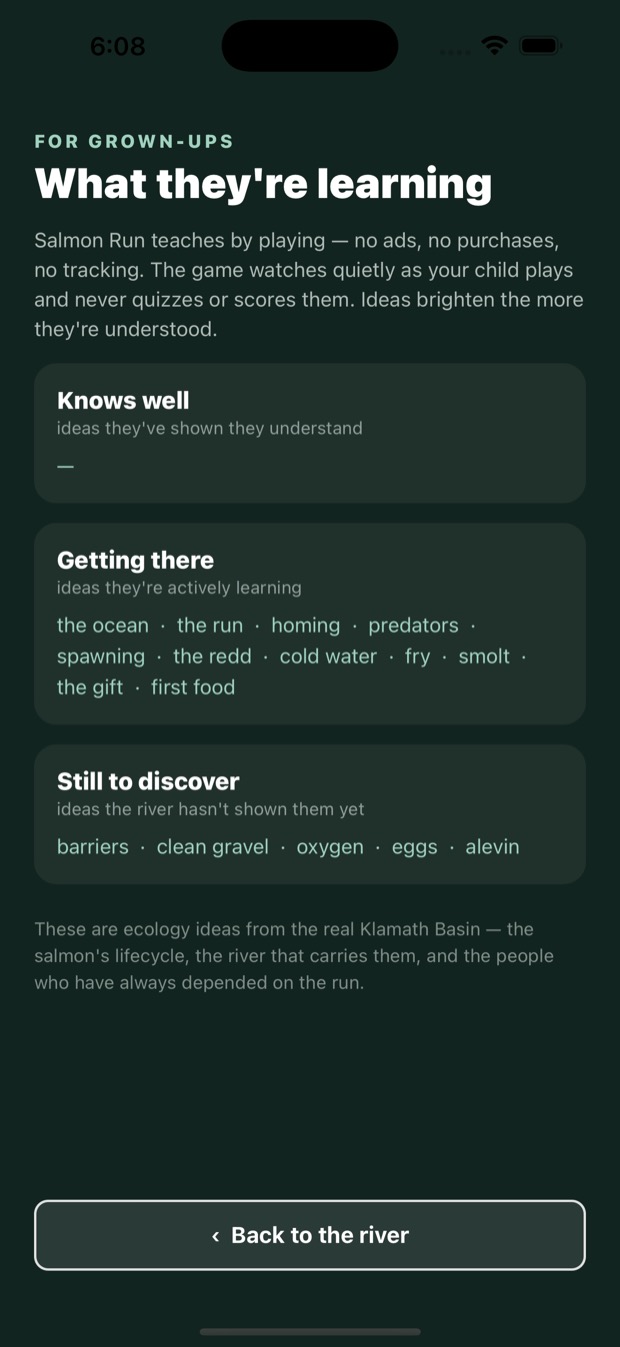
The teaching in Salmon Run happens through play. The player lives the salmon life cycle by doing it. The game never stops to explain that salmon climb upriver to spawn and that the cycle repeats. It hands the player the journey and the obstacles that stand between the salmon and the spawning ground, and those obstacles are the real threats a Klamath salmon meets.
A player who has run the falls past the bears, threaded a net, and watched the water go flat and dead behind a dam comes away with an understanding of the salmon's situation that a diagram does not give. The dam shows up in the game for what it is, a wall across the river, a barrier that has nothing to do with how strong or how well-timed the salmon is. That difference is part of what the game teaches.
The ecology of the Klamath Basin runs through the whole game. The predators are Klamath predators. The water is the Klamath. The run is the run. A child who grows up playing this and later hears about the dam removal will already carry a felt sense of what was at stake in it.
What Salmon Run Is For
Salmon Run was built for the community it comes from. The Klamath Basin has been shaped by the salmon and by the people who depend on them. The games and stories that come out of Basalt Sea Press are meant to hand the next generation something they can carry forward. General education is part of that, and the game serves it. The deeper aim is cultural transmission, the salmon kept as a living presence in the imagination of Klamath children, held there by something they played and felt with their own hands.
The loop is where that aim lives. The game has no ending. The salmon finishes the run and starts again, the way the species does, the way the river does, the way the relationship between the people and the water has carried on through a century of dams and past their removal. There is no win screen to close on. The game asks the player to keep going, and that open loop is what it leaves the player with about survival.
For Teachers
Both fish games have a classroom guide: grade bands, NGSS alignment, five- and ten-minute activities, and discussion prompts, with free App Store codes for Title 1 teachers. Salmon Run and Return of the C'waam in the classroom → Every factual claim the C'waam game makes is listed with its public source in the source register.