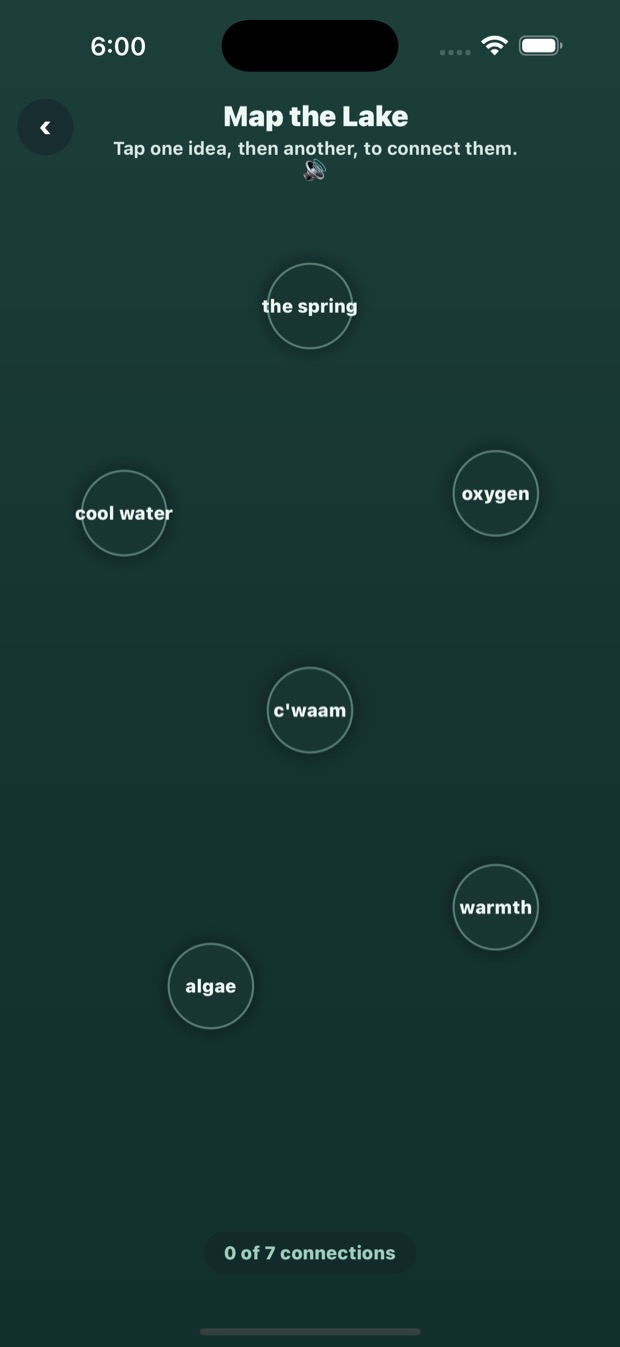
What Return of the C'waam Is
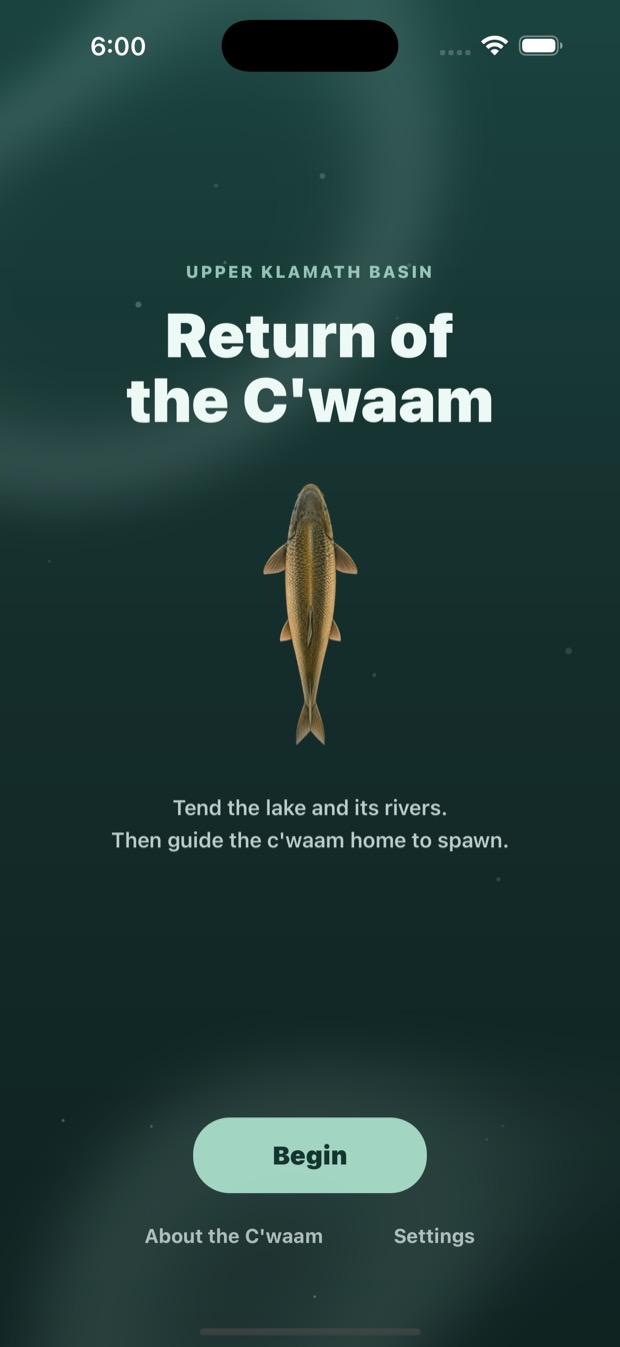
The c'waam is the Lost River sucker, one of the first foods of the Klamath Tribes, a fish so woven into Klamath life that its absence from the lake registers as a real rupture, ecological and cultural at once. Return of the C'waam is an in-development iOS tending game built around that fish, the lakebed it depends on, and the water that decides whether it comes home at all.
The game is a first look, still in development and not yet on the App Store. It is being made by H.L. Delaney, an enrolled member of the Klamath Tribes with Modoc ancestry, through Basalt Sea Press in Klamath Falls. The subject sits in the present. The c'waam is still in the lake, barely. The basin is still contested. The game lives in that present tense, which is the tense that matters.
Tending the Lakebed: How the Game Works
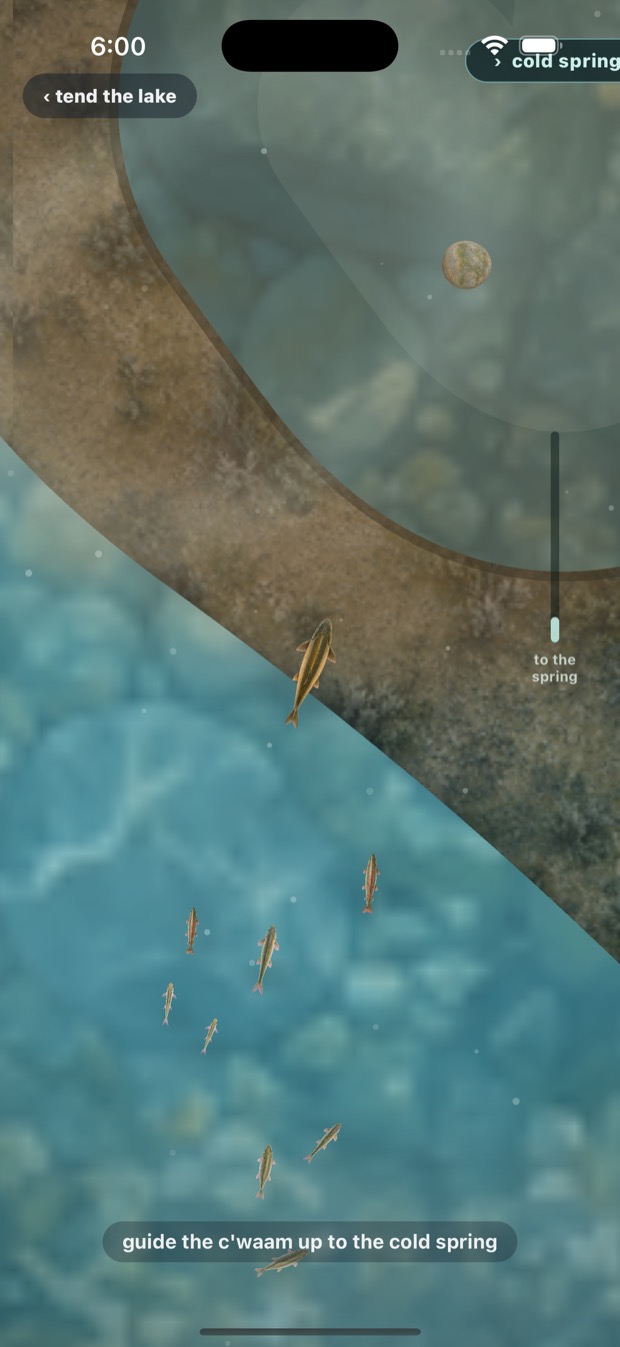
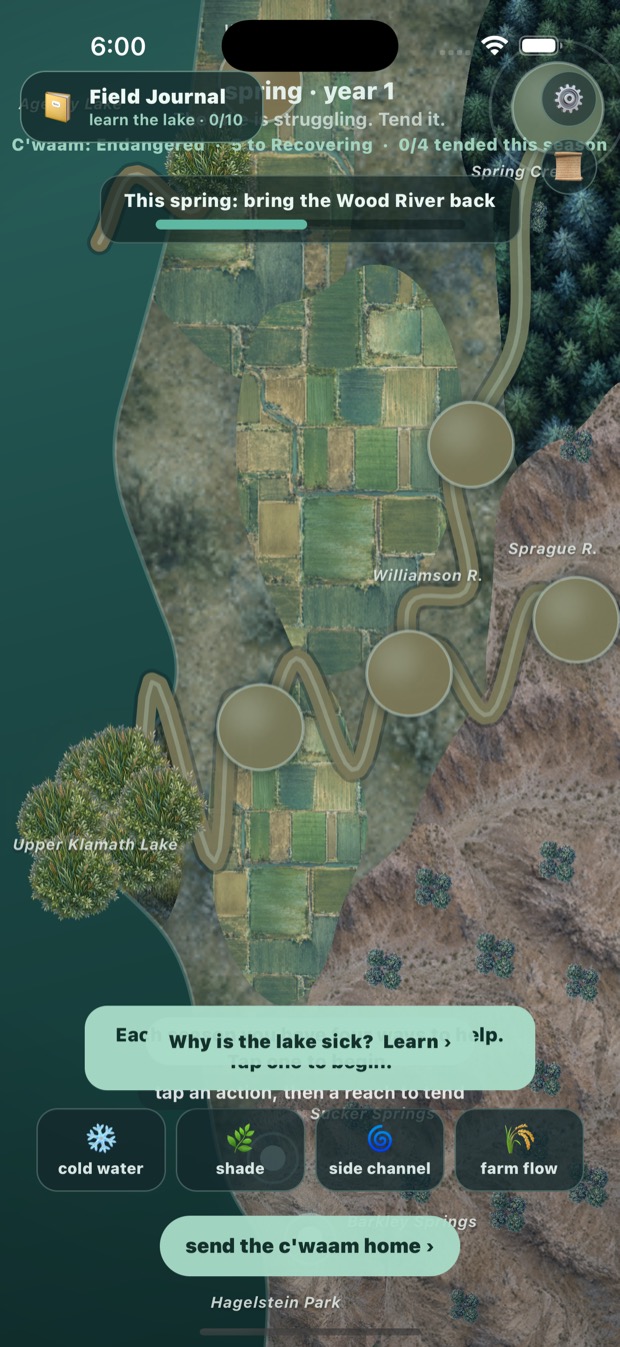
The core verb is tending. You tend the lakebed, the reedbeds, and the water in your stretch of the basin, and when the conditions are right, the c'waam come back to spawn. The foodway forms the loop: wocus, the pond lily seed that is another of the first foods of the Klamath people; the fish; and the water that connects them. The work is slow and steady, closer to stewardship than to a quick harvest. Each season the player keeps conditions right so the fish have somewhere to return to.
The gameplay grows from the actual ecology of c'waam habitat. Reedbeds do real work in a lake system. They filter, they stabilize, they shelter. Water quality shifts with what happens upstream, with what accumulates on the lakebed, and with the choices the player makes inside the game. When the conditions align, the fish move through. When they fall out of balance, the player has to read what went wrong and tend again. The feedback comes from the system itself, from the state of the water and the health of the reedbeds, so the game keeps asking the player to pay attention to the lake.
The C'waam and the Klamath Basin: Cultural and Ecological Stakes
The Lost River sucker has been listed as federally endangered since 1988. The population in Upper Klamath Lake has fallen over decades of water diversion, agricultural runoff, and altered lake levels. The fish can live more than forty years, which means the lake today holds individuals born into a very different basin, fish that have survived conditions that killed the generations behind them. For the Klamath Tribes, the c'waam carries weight well beyond its regulatory listing. It is a first food and a living index of whether the water is being cared for.
The Klamath basin water story is one of the most contested in the American West. The dams came down on the Klamath River in 2023 and 2024, the largest dam removal project in American history, a decades-long effort that the Tribes helped lead. The c'waam's situation in Upper Klamath Lake is bound up in that history and in ongoing struggles over irrigation allocations, water quality standards, and tribal water rights. The game holds onto that complexity while grounding the player in the truth underneath all of it. Clean water is the whole story. Without it, nothing downstream is possible for the fish or the people.
What the Game Teaches: The Educational Model
The educational frame is first foods as ongoing work. That matters because in most educational settings, when Indigenous foodways show up at all, they show up in the past tense, as something that was once practiced. This game puts the player inside a present-tense relationship with the c'waam, one that asks for active, repeated attention across a season. The player tends continuously, because the lake needs continuous tending, and the game treats that as the whole point rather than a single gesture of acknowledgment.
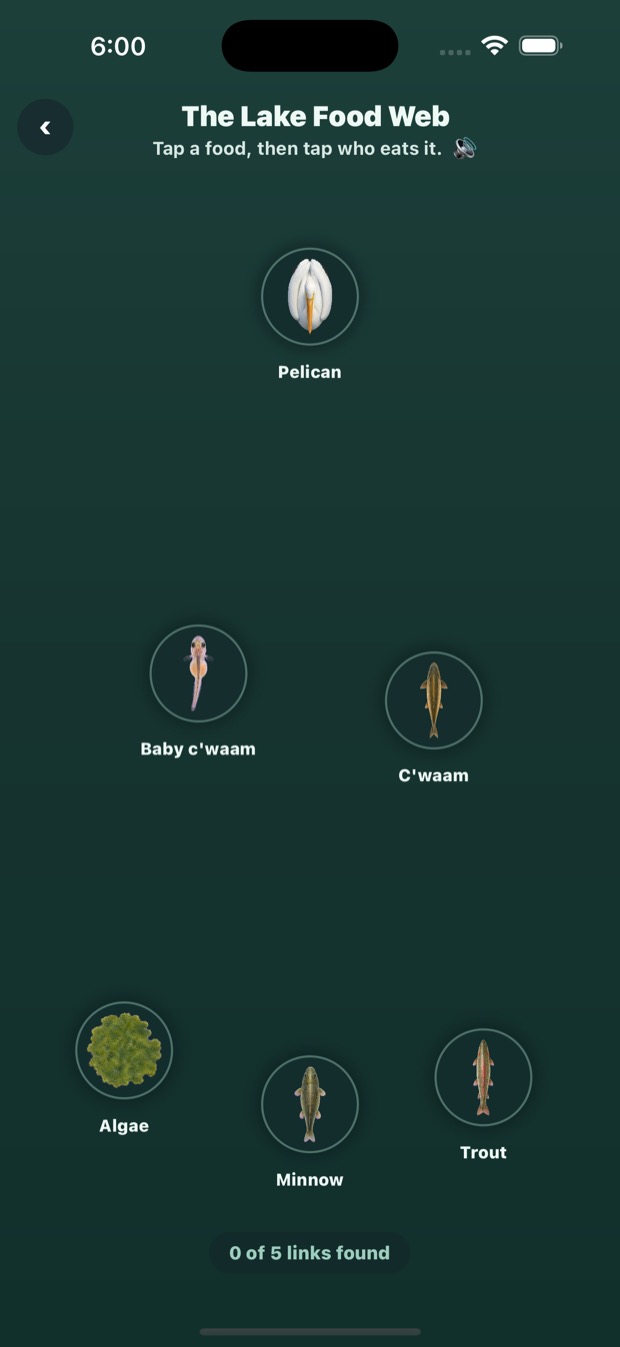
The game teaches, concretely, that the c'waam's survival depends on specific water conditions that human choices affect; that reedbeds are working habitat the fish depends on, part of the machinery of a healthy lake; that wocus, the fish, and the water belong to a single system; and that tending that system is a practice the player returns to, one that responds to neglect and rewards attention. A player who works through a season understands, in a way a paragraph in a textbook cannot supply, why a water quality violation in Upper Klamath Lake is not an abstraction. The harm becomes concrete. It has a fish attached to it.
The model is learning through responsibility. The game hands the player something to care for and then shows what happens when conditions shift. It teaches through the mechanics of tending and lets the consequences do the work that a lecture cannot.
Who Return of the C'waam Is For
The intent is specific and plainly stated: put the c'waam in front of the people who will inherit it. That means the Klamath Tribes community, and most pointedly the younger generation in Klamath Falls and around the basin. Many of them will grow up knowing the dam removal happened without ever having had a direct, sustained relationship with what the water is for, with what the fight was about at its root.
H.L. Delaney is an enrolled member of the Klamath Tribes with Modoc ancestry, and this game is addressed to the community itself, to the students and families and young people who are the reason the water fights mattered. The first foods are still alive. The fish are still in the lake. The work of tending is unfinished, and a generation that understands, in their hands and their attention, why clean water means the c'waam comes home is better equipped to carry that work forward.
What exists now is a first look, a working version that establishes the core loop and the ecological model. The next phase of development deepens the tending mechanics, builds in seasonal variation, and works toward the point where the game is something a family can sit with together, a grandparent and a grandchild, the way the basin itself has always been passed from one generation to the next.
For Teachers
Both fish games have a classroom guide: grade bands, NGSS alignment, five- and ten-minute activities, and discussion prompts, with free App Store codes for Title 1 teachers. Salmon Run and Return of the C'waam in the classroom → Every factual claim the C'waam game makes is listed with its public source in the source register.